Then, we won't have someone doing this (I couldn't take a better shot, I was so pissed, took me sometime to shoot, but this lancer car guy was KAPAL!).

February 27, 2006
TO THE WHOLE PROVINCE
RE: Preliminary guidelines for the present situation of “national emergency”
In view of the confusing reports regarding the present situation, and the many calls on Jesuits, lay partners and Jesuit institutions to support various movements, I wish to share with the Province some information on our present situation and some responses for your discernment and guidance. As with the earlier Guidelines from the Province Commission on the Social Apostolate, these considerations are the fruit of discussion and discernment, understandably hurried given our circumstances, of an adhoc Province Committee on Crisis Response.
At a time when things remain fluid and unstable, these guidelines are presented, not as a total and final response to the situation and the problems of political legitimacy and reform, but as an initial response to very immediate concerns and questions. Moreover, they are offered for consideration and discernment, rather than as “positions” all are required to adhere to. Those who, after prayer and reflection, find that they can, in conscience, hold these positions, may share what is contained with others, who seek guidance in a time of confusion and heightened emotional responses.
Let us continue to beseech our gracious Lord for the light, courage and hope we need as we face these challenging times in our country’s history.
Sincerely in our Lord,
DANIEL PATRICK L. HUANG, S.J.
Provincial
A. The Situation:
There seem to be groups in the military who have seriously been engaged in attempts to seize state power. Part of the impetus for these coup plots appears to be legitimate grievances concerning the present state of the military under the present administration. But it does not seem that the ventilation of these grievances is the only agenda of the present movements among these groups. There also appears to be a genuine intent to take political control of the country. Transitional juntas, with civilians participating, appear to be envisioned. Some civilians, chiefly politicians and organized political groups, seem to know about these plans. Some, convinced that all constitutional means to oust the present administration have been exhausted, support these attempts.
There appears to be a crucial difference between the events of EDSA 1986 and the present. EDSA was a civilian-led initiative against dictatorship that received support from the military. What we are witnessing these days is quite different: a military-led effort seeking civilian support and legitimation.
The response of the government is the declaration of a state of National Emergency, through Proclamation No. 1017. The column of Fr. Joaquin Bernas, S.J., in today’s Philippines Daily Inquirer, explains the constitutional basis for and scope of emergency powers in the Proclamation. But Fr. Bernas also points to the disturbing inclusion of what seem to be martial law powers in the President’s declaration, particularly in its appeal to Article XII, Section 17 of the Constitution, concerning the temporary takeover of privately owned businesses and utilities, a move that seems aimed at government control of the press and media.
B. Some Guidelines:
1. The crisis of political legitimacy and the crying need for reform of the military are real. Nonetheless, any attempt by factions in the military to seize state power, however well motivated, cannot be supported. Such attempts overstep the noble task of the military in a democracy. The consequences of such actions that threaten civilian supremacy over the military will be extremely difficult to reverse and would be seriously harmful for the country’s future. The experience of countries in which a politicized military has taken state power—what we often refer to as “banana republics”—gives sobering illustrations of these consequences. Once having captured the state, military forces have not given up power easily. A cycle of constant struggles for state control among military elements begins, to the detriment of political stability, democratic freedoms and national development.
Democracy demands the rule of civilians who are legitimately chosen from and by the people, and not simply kept in power by military might. It is important to recall the principle articulated by the CBCP in its pastoral statement of January 2006: actions that “condone violence or counter-constitutional means in resolving our present crisis” are not acceptable, especially since they “would only bring about new forms of injustice, hardships, and greater harm in the future.”
2. The serious threat to democratic freedoms involved in Proclamation No. 1017 should be exposed, questioned, and resisted. Even constitutionally mandated emergency powers can be abused if they are exercised disproportionately, to the point of undermining basic rights. It is alarming that, even now, there seem to be indications of this abuse, such as the arrest of civilians without clear bases and charges. This is a serious and unacceptable violation of civil and political rights.
Furthermore, the present administration’s actions towards controlling the media must be resisted. Not only are these moves of questionable constitutionality, but state takeover of media seems morally unjustified, as such a measure would violate the freedom of expression which is a fundamental tenet of democracy.
Thus, it is necessary that the following be addressed with greater urgency: the search for truth on the many controversies of the recent past; the revamp of COMELEC and other necessary electoral reforms; reforms in the military; and the continuing search for solutions to the problems of poverty and inequality that beset most of our people.
C. Some Immediate Courses of Action:
In this situation, the following are appropriate immediate courses of action:
· Gatherings of prayer for peace and a non-violent resolution of the crisis;
· Gatherings to exchange reliable information, and to discern collectively in the light of emerging developments;
· Expressions and actions of protest against the curtailments of democratic freedoms in Proclamation No. 1017.
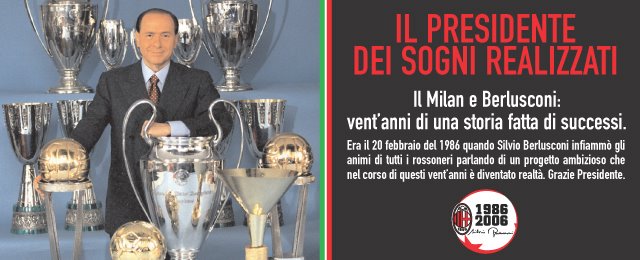 Twenty years with Silvio Berlusconi at the helm . . .
The Japanese celebrate St. Valentine's day in a rather unique fashion. Women give the men gifts of chocolate as well as other gifts.
These gifts of chocolate are divided into two types: giri choco (obligatory chocolate) and honmei choco (chocolate for the man the woman is serious about). Giri choco is given by women to their superiors at work as well as to other male co-workers. It is not unusual for a woman to buy 20 to 30 boxes of this type of chocolate for distribution around the office as well as to men that she has regular contact with.
Needless to say, the approach of Valentine's Day is something that department stores and shops look forward to and promote with zeal because of its potential for increased sales. Large displays featuring chocolate usually with heart-shaped displays start to grace the floors of department stores from mid-January or so.
A woman will normally purchase boxes of giri choco in the several hundred yen range and may purchase an expensive box of honmei choco and another gift such as a necktie for her "special someone".
While all of this may seem quite one-sided, confectioners in Japan - never ones to miss an opportunity to sell more - took advantage of the Japanese feelings of obligation and created "White Day" in 1980 to help assuage the guilt feelings of those poor obligated males who received chocolate on Valentine's Day. On March 14th, exactly one month after Valentine's Day, men who were lucky enough to receive gifts of chocolate have the chance to return the favor by giving the women who gave them gifts of chocolate a more expensive box of chocolate or sweets (for some reason or other, these return gifts seem to be priced slightly higher than those the women purchase). Again, the stores provide plenty of reminders of the approach of this day so that even the most forgetful man cannot say that it slipped his mind. The gifts of chocolate that men buy are in white boxes (after all, it is "White Day") and come with separate shopping bags to put them in.


In 1980, Jack Nicklaus was honored by SI as Sportsman of the Year. The then-40-year-old Bear had just completed a season during which he won the U.S. Open and PGA Championship, quieting talk that his epic career was entering its twilight. That Sportsman was a celebration of his golf. Now Nicklaus deserves the award again, and it has nothing to do with birdies and bogies. In the past year no athlete has displayed more grace or humanity. Nicklaus has long been known not only as golf's greatest champion, but also its most dignified loser. As Jack has said his goodbyes this year it has been a reminder of how much he has meant to golf, and how much he will be missed.
Nicklaus's game may have rendered him a ceremonial golfer, but he can still command the spotlight. This year he stole the show at two of sports' grandest stages, Augusta National and the Old Course. His final Masters was particularly wrenching because only five weeks earlier Nicklaus's grandson Jake had drowned in a hot tub. Most athletes come into view during their youthful prime and then disappear before they fade away. But generations have grown up watching Nicklaus as he has evolved from overpowering prodigy to doting father to middle aged warrior to dignified elder statesman. We are in an era in which the game's best player has built a fortress around his inner-self, but throughout his life and career Nicklaus always let the public in. When he teared up striding his final fairway at the Masters, a nation cried along with him.
His final British Open was no less emotional. The putt of the year in golf may have been Nicklaus's birdie on his last hole at the Old Course, which was witnessed by dozens of players who ringed the green in a showing of appreciation and respect. You may not root for any of them, but Tiger Woods, Phil Mickelson and Ernie Els all have class, a precious commodity in pro sports. It's no accident that all of them grew up idolizing Nicklaus and have been mentored by him throughout their careers.
The true measure of Nicklaus is not his unprecedented 18 major championships, but his relevance in a sport that he has been shaping since 1960. In September, at the Presidents Cup, a U.S. team that has long been ripped for its apathy played its collective heart out for Capt. Jack, bringing him a victory that he claimed was the most satisfying moment of his career. A second Sportsman would be a nice way to end this momentous year. Only one other person has won two Sportsmans, and for a change wouldn't it be nice to see Jack tying one of Tiger's records, and not the other way around?